
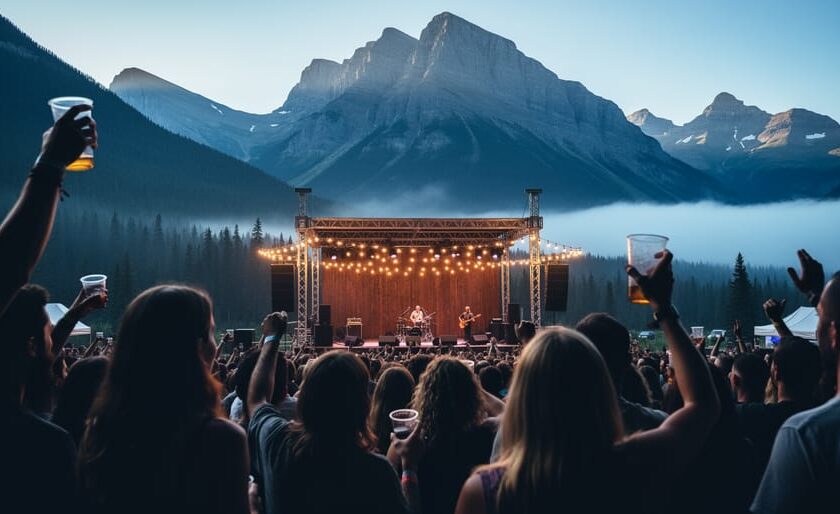
Banff’s music festival scene offers something you won’t find anywhere else: world-class performances surrounded by the Canadian Rockies. Your best bet is choosing between the internationally acclaimed Banff Centre’s summer music programs and the town’s growing roster of indie and folk gatherings, each delivering vastly different vibes but sharing that jaw-dropping mountain backdrop.
I’ve spent enough summers in the Rockies to know that picking the right festival here isn’t just about the lineup. The altitude hits different when you’re dancing at 4,500 feet, the weather can shift from sunny to storming in an hour, and accommodation books up months ahead. But here’s the thing: when you nail the planning, you get an experience that blows typical festival grounds out of the water.
The festival landscape in Banff ranges from classical and jazz performances at intimate venues to multi-day outdoor events where you’re camping under peaks that scrape the sky. Some travelers assume all mountain festivals are the same rustic experience, but Banff actually spans the spectrum from black-tie concerts to barefoot jam sessions by the Bow River.
This guide breaks down exactly what you need to know before committing to a Banff music festival. You’ll learn which factors actually matter when choosing your event, how the different festival types stack up, and which ones suit your specific travel style and music taste. We’ll also cover the mistakes that trip up first-timers, because missing a shuttle or underestimating September snow shouldn’t wreck your mountain festival dreams. And if you’re weighing Banff against other destinations, check out our Canadian festival guide for the full picture.
Understanding Banff’s Music Festival Landscape
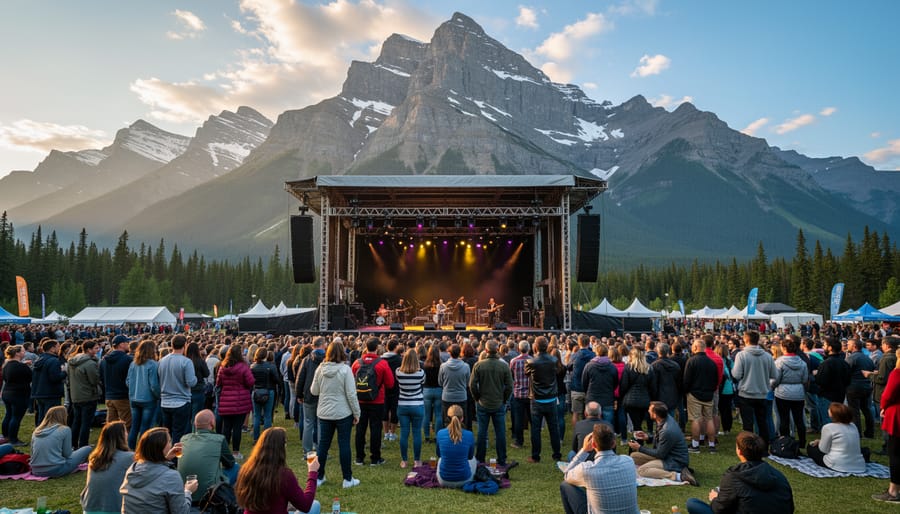
Banff’s music festival scene defies what most people expect from a mountain town of 8,000 residents. Nestled in the Canadian Rockies, this small Alberta community hosts an impressive range of musical events throughout the year, from world-renowned classical performances to intimate jazz sessions and contemporary outdoor celebrations. The mountain backdrop isn’t just scenic window dressing, it fundamentally shapes how these festivals feel and function.
The Banff Centre for Arts and Creativity anchors much of the town’s classical and chamber music programming, drawing internationally acclaimed musicians for performances that rival anything you’d find in major cities. These events typically run from late spring through early fall, with intimate venues that seat 100 to 500 people. You’ll find everything from solo recitals to full orchestral performances, often featuring artists who’ve traveled specifically to Banff for residencies and masterclasses.
Jazz programming takes a more flexible approach, with venues ranging from historic hotels to outdoor patios. Summer brings the most activity, when you can catch live sets against mountain sunsets that make every performance feel like a special occasion. The informal atmosphere at many jazz events contrasts sharply with the formal classical concerts, giving you options depending on your mood.
Contemporary and outdoor festival experiences occupy their own category, particularly during summer months. These events range from single-day gatherings in local parks to multi-day camping festivals in nearby mountain valleys. The elevation (1,400 meters) and unpredictable weather mean organizers build contingency plans that indoor-focused festivals never consider. That same elevation also creates crisp acoustics and cool evenings, even in July.
What sets Banff apart from other summer festival picks across Canada is the mandatory integration of outdoor experiences. Most festivals here assume attendees will hike, explore, or otherwise engage with the landscape between performances. You’re not just attending a music festival that happens to be in the mountains, you’re experiencing how mountain life and music culture intersect.
What to Consider When Choosing Your Banff Festival Experience
Timing and Season Considerations
Banff’s festival calendar clusters around two main windows, each offering completely different vibes. Summer festivals (June through August) dominate the scene, taking advantage of long daylight hours and warm weather, think outdoor stages with mountain backdrops and post-show hikes. However, summer also means peak tourist season, with hotel prices doubling and crowds swelling beyond festival-goers alone.
Winter festivals (January through March) deliver something magical: world-class acoustics in intimate venues while snow blankets the peaks outside. You’ll share the town with far fewer tourists, and accommodation costs drop significantly. The trade-off? Banff weather conditions can be harsh, with temperatures hitting -20°C and occasional road closures affecting travel plans.
Shoulder seasons (April-May and September-October) rarely host major festivals but sometimes feature smaller events. These months offer moderate weather and thin crowds, though unpredictable conditions, sudden snowstorms in September aren’t unusual, make planning trickier. If you’re flexible and prioritize exploring Banff itself alongside music, shoulder periods work brilliantly for combining a quieter mountain experience with whatever festivals happen to run.
Budget and Value Factors
Festival tickets might seem like your main expense, but the real cost of a Banff music festival trip runs much deeper. You’ll need to factor in accommodation, which in Banff can easily exceed your ticket price, especially during peak festival season when hotels fill fast and prices surge. A mid-range hotel room averages $250-400 per night during summer festivals, while budget hostels still run $80-100.
Transportation adds another layer. If you’re flying into Calgary, budget for the 90-minute shuttle or rental car (around $50-80 one way, plus parking fees in Banff). Dining out for every meal gets expensive quickly in this tourist-heavy mountain town, expect $20-35 per person for casual meals, more for nicer spots.
The smart move? Look for festival packages that bundle accommodation with tickets, book lodging months ahead, and plan to self-cater some meals if your accommodation has a kitchen. Some festivals offer multi-day passes with significant per-day savings compared to single-day tickets. Don’t forget smaller costs like national park entry fees ($10.50 daily), gear rental if you’re combining your trip with outdoor activities, and those tempting festival merchandise stands.
Musical Programming and Artist Quality
Evaluating a festival’s lineup goes beyond recognizing a few headliners. Look at the full program schedule, not just the marquee names. Strong festivals curate a cohesive musical journey with thoughtful pacing and genre balance, while weaker ones throw together disconnected acts to fill time slots. Check whether emerging artists get prime stage time alongside established performers, which signals programming depth rather than just booking power.
Genre diversity matters differently depending on your tastes. If you’re attending specifically for classical chamber music, you want deep repertoire variety and challenging pieces, not superficial programming. For festivals blending genres, see if the transitions make sense or feel forced. Banff’s mountain setting has increasingly attracted festivals showcasing traditional Canadian music alongside contemporary acts, creating unique cultural experiences you won’t find elsewhere.
Artist quality isn’t just about fame. Research whether performers are touring their best material or phoning in festival sets. Read past attendee reviews focusing on performance energy and sound quality rather than just star ratings. The best Banff festivals feature artists genuinely excited to perform in the mountains, which transforms the entire atmosphere.
Types of Music Festival Experiences in Banff
Classical and Chamber Music Festivals
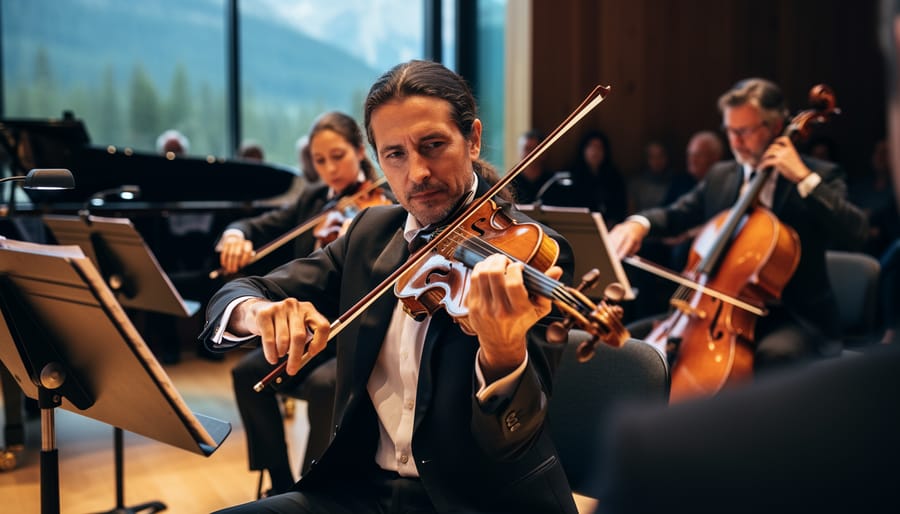
Banff’s classical music scene centers around the Banff Centre for Arts and Creativity, where intimate concert halls frame performances against mountain vistas you won’t find at any other classical venue in Canada. The Rolston Recital Hall seats just 400, creating proximity between performers and listeners that transforms chamber music into something almost conversational. You’re close enough to hear a cellist’s breath before a phrase, to catch the eye contact between quartet members.
The programming leans heavily toward chamber music and solo recitals rather than full orchestral works, a strength, not a limitation. Summer months bring emerging artists from the Banff Centre’s renowned training programs alongside established performers, which means you might discover tomorrow’s star violinist at a Tuesday evening concert. Dress codes skew casual here; jeans and hiking boots mix with business casual, reflecting Banff’s mountain-town informality.
Audiences tend toward serious classical fans and musicians themselves, creating an atmosphere where people actually listen. Phones stay pocketed. The post-concert buzz happens over wine in the lobby, where performers often mingle. Expect tickets from $30-75, reasonable compared to major city concert halls, though availability shrinks fast for headline performances during summer season.
Jazz and Contemporary Music Events
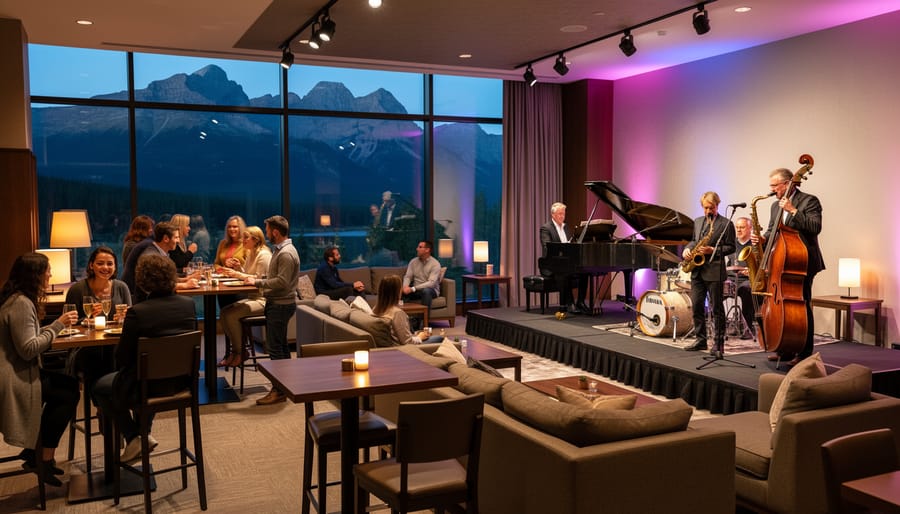
Banff’s jazz scene brings an intimate energy that contrasts beautifully with the grandeur of the surrounding peaks. Most jazz and contemporary events happen in smaller venues like local pubs, hotel lounges, and the Banff Centre’s studio theatres, where you’re close enough to watch musicians interact and improvise. These aren’t massive outdoor productions, they’re cozy sessions where a hundred people might pack a room, creating that electric club atmosphere you’d find in Montreal or Toronto but with mountain views between sets.
Programming tends to mix established Canadian jazz acts with emerging artists exploring crossover sounds, Latin jazz one night, electronic-infused experimental sets the next. You’ll often see weekend series rather than week-long festivals, with late-night jam sessions that let you catch performers in their element. The vibe skews casual and exploratory, reflecting broader festival stage trends toward genre-blending performances.
Dress codes don’t exist, but bring layers, venues range from heated indoor spaces to outdoor patios where spring evenings turn chilly fast.
Multi-Day Outdoor Festival Experiences
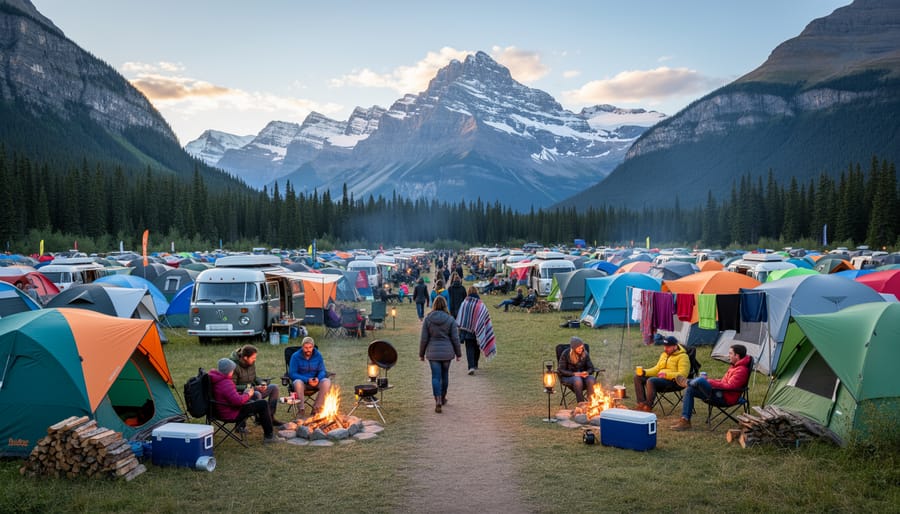
Multi-day outdoor festivals in Banff transform the traditional concert experience into an immersive mountain adventure. Unlike single-evening events, these festivals typically span two to four days and combine live music with the rugged beauty of the Canadian Rockies as your backdrop, think stages framed by towering peaks and performances that continue as the sun sets behind the mountains.
Camping is often integral to the experience. Some festivals offer on-site camping included with your ticket or as an add-on, creating a temporary community of music lovers. You’ll wake up to mountain views and stumble directly to the main stages, though comfort varies wildly from basic tent sites to glamping setups with real beds and heating. If roughing it isn’t your style, Banff townsite hotels fill quickly during festival weekends, so booking months ahead is essential.
Weather preparation makes or breaks your outdoor festival experience here. Mountain weather can change dramatically, you might enjoy blazing sunshine at 2 p.m. and shiver through an evening rainstorm by 8 p.m. Pack layers, waterproof gear, and a warm sleeping bag rated for cooler temperatures than the forecast suggests. Summer nights in the mountains drop to near-freezing even in July.
The payoff is unmatched atmosphere. Dancing under stars so bright you can actually see the Milky Way, with fresh alpine air replacing the usual festival dust, creates memories that standard city venues can’t touch. Just be ready to embrace the unpredictability that comes with the territory.
Our Top Recommendations for Different Festival-Goers
Best for First-Time Banff Festival Visitors
If you’ve never experienced Banff’s music scene, start with the Banff Centre Summer Arts Festival. It runs throughout the warmer months and offers diverse programming that lets you sample multiple genres without committing to a single niche. You’ll catch everything from classical recitals to jazz performances, often in the same weekend.
The venues matter here. Look for events at the Rolston Recital Hall or outdoor performances on the Banff Centre campus. These spaces give you that mountain backdrop without the logistical challenges of backcountry festivals. Tickets typically start around $30, making it easy to test the waters before investing in pricier multi-day passes.
Book your accommodation at least three months ahead, even for shoulder season events. First-timers often underestimate how quickly Banff hotels fill during festival periods. Stay in town rather than Canmore for your first visit. Walking to venues beats coordinating shuttles when you’re still learning the festival rhythm.
Plan one non-music day to explore the townsite and trails. This helps you appreciate why the setting makes Banff festivals distinct from urban Canadian events.
Best for Classical Music Enthusiasts
The Banff Centre for Arts and Creativity sits at the heart of Canada’s classical music scene, and for good reason. The venue draws internationally acclaimed musicians to perform in intimate halls surrounded by mountain peaks, a setting that elevates chamber music to something transcendent.
Your best bet is the Banff International String Quartet Competition, held every three years. This isn’t a passive listening experience; you’ll witness emerging ensembles compete at the highest level, with performances that blend technical brilliance and raw emotion. The 2026 competition runs from August 25 to September 6, offering nearly two weeks of world-class quartet playing.
For year-round classical programming, check the Banff Centre’s performance calendar. The venue hosts everything from solo recitals to full orchestral concerts throughout the season. Many performances take place in the Rolston Recital Hall, an acoustically refined space that seats just 400, you’re close enough to hear every nuance.
Don’t overlook free community concerts and artist talks. These informal sessions often feature competition participants or resident musicians, and they’re genuinely rewarding if you appreciate the craft behind the performance.
Best for Budget-Conscious Festival-Goers
You don’t need a massive budget to enjoy Banff’s music scene. The Banff Centre frequently hosts free or low-cost student performances and recitals throughout the year, check their public events calendar for classical concerts that cost nothing beyond your time. These showcase emerging talent in world-class venues without the premium price tag. For summer festivals, volunteer programs at events like Banff Summer Arts Festival often provide free access in exchange for a few shifts helping with logistics or crowd management.
Book accommodation in Canmore instead of Banff proper, it’s fifteen minutes away but typically runs thirty to forty percent cheaper for comparable quality. Cook your own meals at your lodging rather than eating out for every meal, and consider attending afternoon or weekday performances which often carry lower ticket prices than prime-time weekend slots. If you’re willing to explore more Canadian options beyond Banff, smaller mountain towns like Fernie or Revelstoke host music events with similar scenery at fraction of the cost, though they lack Banff’s prestige venues and consistent programming quality.
Common Mistakes to Avoid When Planning Your Banff Festival Trip
I’ve attended festivals all over Canada, but I’ll admit my first Banff trip was a bit of a disaster. I booked accommodation the week before, ended up paying triple the normal rate for a questionable motel in Canmore, and showed up in sandals just as mountain weather rolled in. Learn from my mistakes, and those I’ve seen countless others make.
Accommodation Timing Misjudgments
The single biggest error is underestimating how quickly Banff’s limited lodging fills up. Many first-timers assume they can book a few weeks out, especially for smaller festivals. Wrong. During major events like the Banff Centre’s summer programs, hotels book six months ahead. Even Airbnbs vanish fast. I’ve watched friends scramble for last-minute options in Calgary, 90 minutes away, because they waited too long. Book your stay the moment you buy your festival pass, not after.
Weather Preparation Failures
Mountain weather doesn’t care about your festival outfit plans. I’ve seen visitors shivering through outdoor performances in July because they packed for “summer in Canada” without considering Banff’s 1,400-meter elevation. Temperatures can swing 20 degrees between afternoon and evening. Rain can appear from nowhere. Snow isn’t impossible even in late spring or early fall. Pack layers, always bring a rain jacket, and have closed-toe shoes with grip, those Instagram-worthy sandals won’t cut it on wet paths between venues.
Common Planning Pitfalls to Sidestep
- Underestimating travel time from Calgary airport, budget 90+ minutes, more during summer traffic
- Not pre-booking restaurant reservations in town for post-show dinners
- Forgetting that some festival venues require shuttle buses or significant walking between stages
- Assuming cell service works everywhere in the mountains for digital tickets
- Scheduling back-to-back events without accounting for Banff’s limited parking and one-way streets
- Ignoring altitude effects, hydration matters more here than at sea-level festivals
Transportation Oversights
Banff’s compact downtown seems walkable on a map, but festival venues spread across town and up to the Banff Centre require planning. Parking fills up completely during events, and rideshares are scarce compared to major cities. The local Roam transit works well but runs limited evening hours. If you’re driving, know where you’ll park before the festival starts. Better yet, stay within walking distance of your main venues or budget for taxis that actually exist here, unlike the Uber fantasy many visitors arrive expecting.
Practical Tips for Making the Most of Your Festival Experience
Arrive early enough to acclimatize to Banff’s elevation, the mountain air at 4,500 feet affects everyone differently, and you’ll enjoy performances more when you’re not battling altitude headaches. Give yourself at least half a day before your first show to adjust and hydrate thoroughly.
Book your accommodation the moment you commit to a festival. Banff’s limited lodging fills months ahead for major events, and prices climb as availability shrinks. Consider staying in nearby Canmore if Banff proper is sold out; it’s a 20-minute drive and often offers better value with easier parking.
Layer your clothing obsessively. Mountain weather shifts rapidly, a sunny afternoon can turn into a chilly evening within an hour, especially for outdoor venues. Pack a warm fleece or down jacket even for summer festivals, and keep a rain shell handy. Locals dress in layers year-round for good reason.
Explore Banff Avenue’s dining scene before and after performances rather than relying on festival concessions. Block Kitchen + Bar and Park Distillery offer excellent pre-show meals within walking distance of most venues. For quick bites between sets, Whitebark Cafe and Wild Flour Bakery provide grab-and-go options that beat typical festival food in quality and price.
Combine your festival days with early morning mountain activities. Most performances start late afternoon or evening, leaving mornings free for hiking Johnston Canyon, riding the Banff Gondola, or soaking in the Upper Hot Springs. The contrast between wilderness exploration and evening concerts creates a richer Banff experience than festival-only attendance.
Connect with festival staff and volunteers, they’re usually locals with insider knowledge about secret viewpoints, after-hours jam sessions, and which restaurants stay open late. Traditional Canadian performances especially benefit from this local context, helping you understand what to expect from programming rooted in regional heritage.
Download offline maps before arriving, as cell service can be spotty in mountain venues and remote performance spaces.
Frequently Asked Questions
The mountain setting and unique timing of Banff’s festival season raise specific questions that can make or break your experience. Here’s what first-time festival-goers typically want to know before committing to their Banff adventure.
When should I book accommodation for a Banff music festival?
Book at least 3-4 months ahead for summer festivals, and even earlier (6+ months) for major events like the Banff Centre concerts. Banff has limited accommodation, and festival dates coincide with peak tourist season, driving up both prices and scarcity.
What’s the weather like during Banff’s festival season?
Summer festivals (June-August) typically see daytime temperatures of 15-25°C (59-77°F), but mountain weather changes quickly. Pack layers, a rain jacket, and warmer clothing for evening performances, temperatures can drop to 5-10°C (41-50°F) after sunset.
Can I get to Banff festivals without a car?
Yes, but it requires planning. Banff is accessible by bus from Calgary (about 90 minutes), and the town itself is walkable. However, renting a car gives you flexibility for exploring between performances and accessing outdoor festival venues.
Are Banff music festivals family-friendly?
Most classical and jazz festivals welcome all ages, though specific events may have age restrictions for evening performances where alcohol is served. Check individual festival policies, and note that some outdoor venues work better for families than intimate concert halls.
Beyond these basics, visitors often wonder about combining festival-going with outdoor activities. The short answer: absolutely plan for it. Most festivals schedule performances in the evening, leaving mornings and afternoons free for hiking, exploring Lake Louise, or riding the Banff Gondola. Just don’t overschedule yourself, altitude and mountain activities can be more tiring than expected, and you want energy for those late-night jam sessions.
Cell service in Banff town is reliable, but it gets spotty on hiking trails and in some mountain venues. Download festival schedules, maps, and any tickets to your phone beforehand. Many venues accept contactless payment, but carry some cash for food vendors at outdoor events.
If you have accessibility needs, contact festival organizers directly well before your visit. The Banff Centre has wheelchair-accessible venues, but some historic locations and outdoor festival sites present challenges. Staff can often arrange accommodations, but they need advance notice to make it work smoothly.
Main Options Compared
To help you quickly evaluate which Banff festival experience suits you best, here’s a direct comparison of the three main festival types:
| Feature | Classical/Chamber Festivals | Jazz & Contemporary Events | Outdoor Multi-Day Festivals |
|———|—————————-|—————————|—————————-|
| Typical Duration | 3-5 days | 1-3 days | 2-4 days |
| Venue Type | Concert halls, intimate theaters | Clubs, mountain lodges | Outdoor stages, natural amphitheaters |
| Average Ticket Cost | $150-$400+ per performance | $50-$150 per event | $200-$500+ (multi-day pass) |
| Dress Code | Smart casual to formal | Casual | Very casual, weather-appropriate |
| Crowd Size | 200-800 per show | 100-500 | 1,000-5,000+ |
| Weather Impact | Minimal (indoor) | Minimal (indoor) | Significant (plan for rain/cold) |
| Best Season | Summer (June-August) | Year-round | Summer (June-September) |
| Accommodation Need | Book 3-6 months ahead | Book 1-3 months ahead | Book 6-12 months ahead |
| Ideal For | Serious music lovers, refined tastes | Genre fans, social atmosphere | Adventurous festival-goers, camping enthusiasts |
This breakdown makes it easier to match your preferences, budget, and travel style with the right Banff festival experience.
Choosing the right Banff music festival experience comes down to understanding what you value most: world-class classical performances in intimate venues, contemporary sounds against mountain backdrops, or multi-day outdoor events that blend music with adventure. The mountain setting isn’t just scenery, it fundamentally shapes how you experience live music, from crisp alpine acoustics to the unique energy of performing and listening at elevation.
Your perfect festival match depends on honest self-assessment. First-timers benefit from shorter, venue-based events that make logistics manageable while delivering authentic Banff atmosphere. Classical devotees find rare programming quality here that rivals international festivals but with better access to performers. Budget-conscious visitors can craft memorable experiences by combining free events with strategic splurges and shoulder-season timing.
The festivals that thrive in Banff succeed because they embrace rather than fight the location. Weather preparation, early accommodation booking, and realistic daily schedules aren’t optional, they’re what separate frustrating trips from transformative ones. But when you match your musical tastes, budget realities, and adventure comfort level with the right event, Banff delivers something no urban festival can replicate.
Canada’s festival landscape offers countless options, but Banff occupies a distinct space where musical excellence meets wilderness immersion. Whether you’re drawn by specific artists, genre deep-dives, or the sheer novelty of experiencing live music surrounded by the Rockies, the key is choosing deliberately rather than defaulting to whatever’s marketed hardest. Your ideal Banff festival experience exists, it just needs to align with who you actually are as a festival-goer.