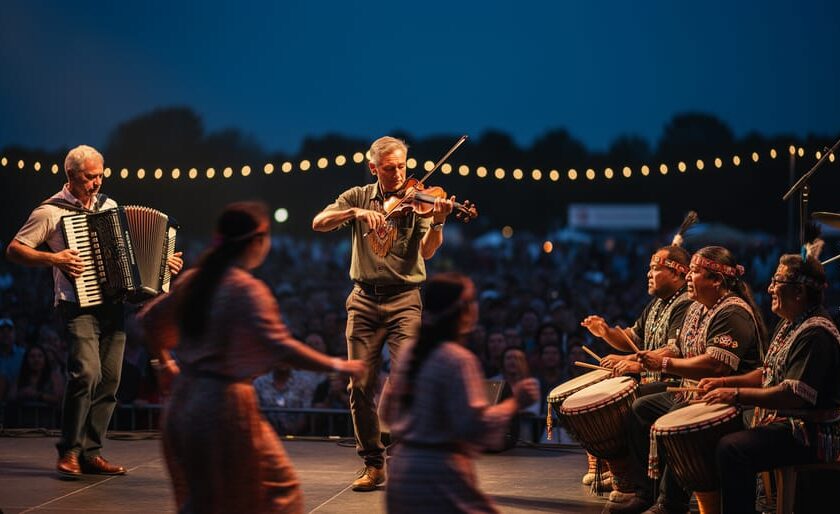
Traditional Canadian music is a living, breathing mosaic of fiddle-driven Celtic reels, Indigenous drum circles, Québécois foot-stomping tunes, and Maritime kitchen parties that’s exploding across festival stages in 2026. If you’re wondering what makes this music “Canadian” beyond a polite apology sung in two official languages, it’s the way centuries of immigration, Indigenous traditions, and regional isolation created sounds you won’t hear anywhere else. From the Métis jigs of the Prairies to the accordion-heavy chanson of Quebec and the Celtic-infused sea shanties of the Atlantic coast, this isn’t one genre but a collision of cultures that somehow became our national soundtrack.
Here’s what matters for festival-goers right now: traditional Canadian music is having a serious moment. I’ve watched lineups at Canadian music festivals shift from tentative heritage stages tucked in the back to main-stage acts drawing thousands. Young artists are remixing these centuries-old traditions with electronic beats and indie sensibilities, while purists keep the original forms alive at intimate regional gatherings.
Whether you’re chasing the electric atmosphere of a Newfoundland kitchen party or want to experience a powwow’s spiritual resonance, knowing where to find authentic traditional music and what you’re actually listening to transforms the experience from passive watching to genuine connection. This isn’t your grandfather’s folk festival anymore, though he’d probably still love it.
What Actually Counts as Traditional Canadian Music?
Here’s the thing about traditional Canadian music: it’s not one sound. It’s more like a potluck where every region brought something different to the table, and somehow it all worked.
Start with the original hosts. Indigenous music predates everything else by thousands of years, and it varies dramatically from nation to nation. You’ve got powwow drumming that echoes across the prairies, Indigenous throat singing from Inuit communities in the North that sounds like nothing else on earth, and ceremonial flute traditions from various First Nations. Each carries deep cultural significance that goes way beyond entertainment.
Then came the settlers, each group dragging their musical baggage along. French colonists brought their fiddle-driven reels and call-and-response songs to Quebec. Scottish and Irish immigrants landed in the Maritimes and Cape Breton with Celtic jigs that fused with local styles. English folk ballads took root in Newfoundland, evolving in isolation for generations. Ukrainian settlers filled prairie community halls with accordion polkas. The result? A patchwork of regional sounds that barely knew each other existed until relatively recently.
- Quebecois Trad
- Fast-paced fiddle music with French-language call songs, featuring footwork percussion and often accompanied by accordion or harmonica. Rooted in 17th-century French folk traditions but evolved into its own beast.
- Maritime Celtic
- Scottish and Irish fiddle tunes mixed with local influences, particularly strong in Cape Breton and the Atlantic provinces. Known for intricate bowing techniques and dance-friendly rhythms.
- Powwow Music
- Indigenous ceremonial and social dance music centered on drum groups, with distinct Northern and Southern styles. Vocals use vocables (non-lexical syllables) and songs passed down through generations.
- Prairie Folk
- Storytelling-focused acoustic music blending cowboy ballads, Ukrainian dance tunes, and Indigenous influences. Often features guitar, fiddle, and harmonica.
Now here’s where it gets murky. The line between “traditional” and “contemporary folk” is basically nonexistent at this point. Artists are taking century-old fiddle tunes and layering them over electronic beats. Throat singers collaborate with indie rock bands. A song written last year might use traditional instruments and structures, while a 200-year-old tune gets a jazz arrangement. The traditional and contemporary overlap so completely that academics have given up drawing hard boundaries.
At festivals, you’ll hear all of it labeled “traditional Canadian music” even when half the set is original compositions. What matters isn’t the age of the song but the connection to cultural roots, the use of inherited techniques and instruments, and the intention to honor rather than just borrow. It’s less about preservation and more about continuation.
The Festival Comeback Nobody Saw Coming

The Artists Leading the Charge
The new wave isn’t coming from Nashville or LA, it’s bubbling up from kitchen parties in Cape Breton, community halls in Manitoba, and Indigenous cultural centers across the prairies. Artists like The Dead South have already proven that traditional sounds can pack festival tents, but 2026’s lineup goes deeper into Canada’s musical roots.
Take The Fretless, a Calgary-based string quartet who layer Celtic fiddle traditions with indie rock sensibilities and electronic loops. Their festival sets feel equally at home on folk stages and late-night dance tents. Similarly, Digging Roots blends Anishinaabe and Métis roots music with blues, soul, and gospel, their performances often include traditional hand drums alongside electric guitars, creating something that honors heritage while sounding completely now.
Quebec’s De Temps Antan are redefining what traditional Quebecois music can be, swapping the predictable folk festival vibe for high-energy shows where fiddles, accordions, and jaw-dropping foot percussion get festival crowds jumping. They’ve mastered the art of making centuries-old reels feel urgent and fresh.
What’s driving this shift? Partly it’s TikTok shaping festival experiences viral clips of throat singing, jigging, and spoon-playing are introducing Gen Z to sounds their parents might have overlooked. But it’s also artists refusing to treat traditional music as museum pieces. They’re sampling, remixing, and collaborating across genres.
The result is festival stages where you might hear powwow drums layered over electronic beats (think Snotty Nose Rez Kids), or Maritime folk songs reimagined with synths and drum machines. These aren’t tribute acts, they’re artists who grew up with these traditions and are dragging them, respectfully but boldly, into 2026.
Where to Catch Traditional Canadian Music at Festivals in 2026
East Coast Traditions
The East Coast doesn’t mess around when it comes to keeping traditional music alive. Celtic Colours in Cape Breton every October transforms the entire island into a nine-day celebration of Cape Breton fiddle music, Gaelic songs, and step dancing, you’ll catch world-class performers in tiny community halls alongside local legends who’ve never left the island. The Festival Acadien de Clare in Nova Scotia runs each July with a proper kitchen party vibe, where Acadian fiddlers and accordion players trade reels that haven’t changed in 400 years. What makes these festivals special is the mixing, you’ll hear pure Celtic traditions from Scotland and Ireland that landed here centuries ago, blended with French Acadian rhythms that developed in isolation. Stan Rogers Folk Festival in Canso brings together Maritime folk and sea shanties every July, and if you’re strategic with your festival lineup picks you can catch spontaneous harbour-side sessions where the real education happens. Come ready to dance, because sitting still marks you as a tourist.
Quebec’s French-Canadian Heritage
Quebec’s festival scene pulses with a distinct energy that sets it apart from anywhere else in Canada. The province’s French-Canadian musical heritage runs deep, rooted in centuries-old traditions brought from France and shaped by life along the St. Lawrence River. At festivals like Festival Mémoire et Racines in Saint-Charles-Borromée and Festival Trad in Montreal, you’ll hear the driving rhythms of fiddles, foot-tapping percussion, and accordion melodies that have soundtracked Quebec gatherings for generations. What makes 2026 particularly exciting is how contemporary artists like Les Charbonniers de l’enfer and Le Vent du Nord are electrifying these traditional sounds with modern arrangements, making them irresistible to younger audiences. The call-and-response vocal traditions, the infectious reels and jigs, the spontaneous kitchen-party atmosphere, it all creates an experience that feels both historic and urgently alive. If you’re figuring out where to find live music that genuinely celebrates Canada’s cultural diversity, Quebec’s traditional music festivals deliver an authenticity you won’t find replicated anywhere else.
Indigenous Music Celebrations
Indigenous music festivals offer something you won’t find anywhere else, a direct connection to musical traditions that predate Canada itself by thousands of years. These gatherings center throat singing, hand drumming, and storytelling that’s been passed down through generations, now thriving alongside contemporary Indigenous artists who blend these ancestral sounds with hip-hop, electronic, and rock.
The Manito Ahbee Festival in Winnipeg (late May) is your gateway to the largest Indigenous music celebration in the country. Expect powerful drum circles, Métis jigging competitions, and headliners who span traditional powwow music to modern Indigenous pop. Toronto’s Tiny Island Festival and Vancouver’s Talking Stick Festival both run summer programming that showcases Indigenous artists from across Turtle Island, not just Canada.
What makes these festivals different? The music isn’t separated from ceremony and community. You’ll witness sacred songs performed with the same reverence they’ve held for centuries, then catch a DJ set sampling those same elements hours later. Come ready to listen, learn, and understand that you’re experiencing living cultures, not museum pieces.

Prairie and Western Folk Gatherings
The prairies and western provinces bring a different flavour, think wide-open spaces, ranching heritage, and folk traditions shaped by homesteading stories. The Winnipeg Folk Festival remains the region’s heavyweight, drawing 80,000+ attendees each July with its legendary workshop stages where traditional artists jam alongside contemporary folk acts. You’ll catch everything from Ukrainian fiddle tunes to Indigenous powwow drumming, often in the same afternoon.
Out west, Vancouver Island MusicFest blends roots, folk, and Celtic traditions against a stunning coastal backdrop, while Calgary’s Folk Music Festival leans into its cowboy music heritage with regular honky-tonk and western swing programming. Saskatchewan’s Northern Lights Bluegrass and Old Tyme Music Festival might be smaller, but it’s pure, three days of banjo picking, square dancing, and the kind of front-porch jam sessions that defined prairie social life for generations.
These events feel less polished than their eastern counterparts, which is exactly the point. Check our summer festival guides for specific 2026 dates and lineup announcements, because these gatherings often book traditional acts months in advance and camping spots disappear fast.
What to Expect When You’re There
Showing up to your first traditional Canadian music festival is a bit like being invited to someone’s family reunion, exciting, but you might worry about doing something awkward. Don’t. These events are some of the most welcoming you’ll find, but a few pointers will help you feel confident from the moment you arrive.
First, forget about the fashion show mentality of big commercial festivals. Traditional music crowds lean heavily toward comfort and practicality. You’ll see everything from vintage flannel and cowboy boots to jean jackets and running shoes. The only real dress code is being ready to dance, and trust me, you will dance. If you’re heading to an outdoor event, layer up. Prairie nights get cold fast, and Maritime fog doesn’t care about your Instagram aesthetic.
Participation is half the experience at these festivals. Unlike mainstream events where you stand facing a stage for hours, traditional music gatherings expect you to join in. Can’t sing? Doesn’t matter. Don’t know the steps? Someone will teach you. The person next to you will likely grab your hand and pull you into a circle dance or show you how to stomp along during a square dance. Fighting this is pointless, just go with it.
Here’s what first-timers should know:
- Arrive early to workshop tents, they fill up fast and often don’t allow late entry
- Bring cash for merch tables; many artists skip card readers
- If you play an instrument, pack it, jam sessions welcome all skill levels
- Kitchen parties and tent gatherings go late; budget your energy accordingly
- Ask before recording; some traditional songs carry cultural protocols
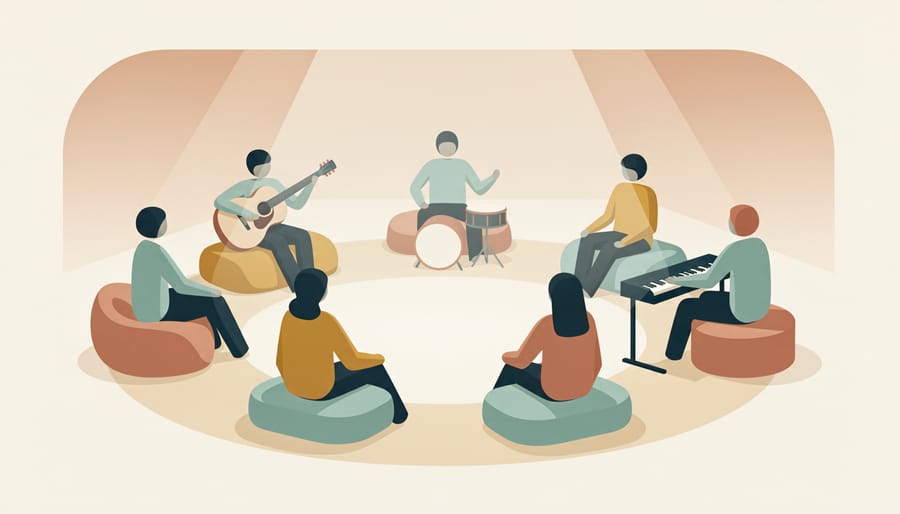
Jam sessions deserve special mention because they’re everywhere at these festivals. You’ll spot them in campgrounds, beer tents, parking lots, and official workshop spaces. The unwritten rule is simple: watch and listen first, then contribute if you can. Even clapping on beat or adding percussion with whatever’s handy (spoons, a table, your thighs) counts as participation.
Kitchen parties, the late-night gatherings where the real magic happens, operate on festival time, meaning they start whenever the main stage wraps and end when the last person standing calls it quits. These aren’t scheduled events; they emerge organically. Follow the sound of fiddles after midnight, and you’ll find them.
The Instruments You’ll Hear (And Why They Matter)
Walking through a traditional Canadian music festival, you’ll spot instruments that tell the story of who settled where, and how those sounds evolved into something uniquely ours. The fiddle dominates nearly every stage, whether it’s the lightning-fast Cape Breton style that’ll make your jaw drop or the smoother Métis Red River jig sound. These aren’t your classical concert violins; they’re workhorses that spent centuries in kitchens, barns, and community halls before landing on festival stages.
Accordions show up everywhere traditional music lives. In Quebec, the button accordion drives those relentless dance tunes that keep crowds moving past midnight. Maritime festivals feature both piano and button styles, often played so fast your eyes can barely follow the fingers. The squeeze-box might look old-fashioned, but watch a skilled player work one and you’ll understand why it’s stuck around.
Then there’s the wonderfully weird stuff. Spoons, yes, actual kitchen spoons, create that rhythmic clatter you hear threading through songs. They’re harder to play than they look (I’ve got the bruised knuckles to prove it). Jaw harps produce that twangy, almost otherworldly drone that Indigenous musicians have used for generations. At powwows and Indigenous music festivals, hand drums provide the heartbeat, often accompanied by group singing that raises every hair on your arms.
You’ll also catch glimpses of mouth harps, bones, washboards, and the occasional gut-bucket bass, a stick, string, and washtub contraption that shouldn’t work but absolutely does. These instruments matter because they’re democratic. They were affordable, portable, and didn’t require formal training, perfect for settlers, immigrants, and Indigenous communities keeping their music alive through tough times. When you’re looking for more festival ideas featuring these sounds, pay attention to workshop tents where musicians often demonstrate techniques between main-stage sets.
Beyond the Main Stage: Where the Real Magic Happens
The headliners at traditional Canadian music festivals are great, but honestly? They’re just the warm-up act for what happens everywhere else. While mainstream festivals shepherd you from stage to stage on a tight schedule, traditional music events sprawl into workshops, hallways, parking lots, and any corner where someone pulls out a fiddle.
Workshop tents are where you’ll actually learn something. Unlike the passive “watch and clap” experience of big stages, these sessions invite you in. A Cape Breton fiddler might break down a strathspey’s tricky bowing pattern, then have everyone try it. An Inuit throat singer explains the breathing technique, and suddenly half the tent is attempting it (badly, but joyfully). You leave with skills, not just memories.
Dance halls transform the whole vibe. Square dances, kitchen parties, and step-dancing workshops aren’t spectator sports. A caller will shout instructions over the fiddle music, strangers will grab your hands, and within two minutes you’re spinning through a reel you didn’t know you could do. The skill level doesn’t matter. The trying does.
I stumbled into one of these sessions at 1 AM during a Quebec festival, following accordion sounds to a community hall nobody had mentioned in the official program. Thirty people, ages 8 to 80, were trading songs in French and English while someone’s grandmother taught complicated footwork in the corner. No stage, no tickets, no phones out. Just music the way it’s been passed down for generations, in a room that smelled like coffee and wood smoke. That’s the stuff you can’t livestream.
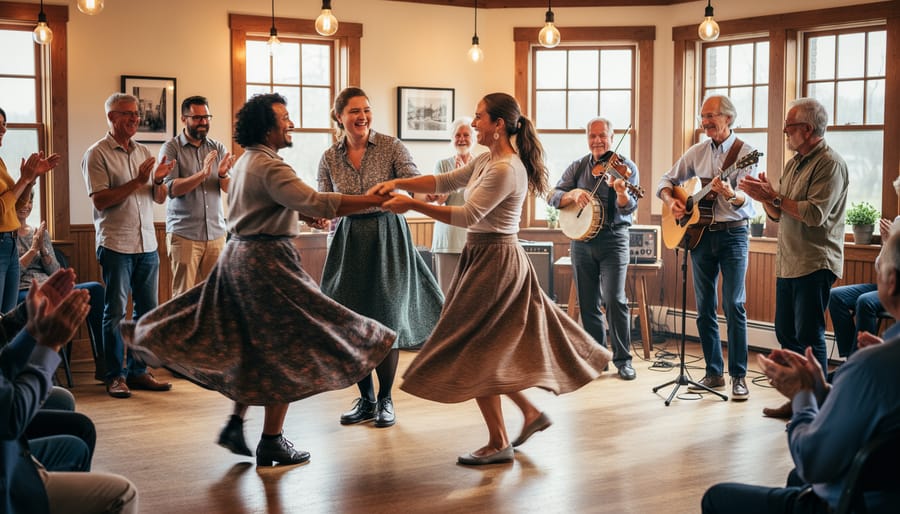
If there’s one thing 2026 has proven, it’s that the best festival moments aren’t always on the main stage. Traditional Canadian music has carved out something genuinely special in our festival landscape this year, spaces where you can hear throat singing at sunset, join a kitchen party that lasts until dawn, or learn a reel from someone whose grandmother learned it from her grandmother.
This isn’t nostalgia tourism. These festivals are living, breathing celebrations where centuries-old traditions meet contemporary energy. The fiddle player might post their workshop clips on TikTok. The powwow dancer could be headlining tomorrow night. That’s exactly what makes it work.
For anyone planning their festival calendar, traditional music events deliver something increasingly rare: genuine cultural exchange without the corporate polish. You’ll sweat through ceilidh dances, mess up the steps, and laugh about it with strangers who become friends. You’ll discover instruments you’ve never seen and songs that hit differently when you understand where they came from.
Canada’s musical roots run deeper and wider than most of us realize. Whether you’re drawn to the Celtic fire of Cape Breton, the driving energy of Quebecois reels, or the profound power of Indigenous drumming, there’s a festival waiting to show you something authentic.
Skip the usual lineup and take a chance on tradition this year. Your summer will be better for it.