
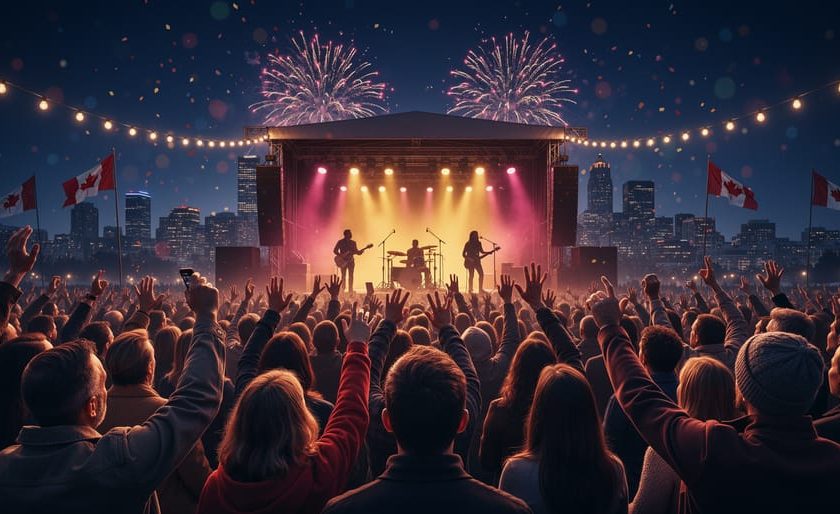
Canada’s best-known music comes down to six artists and four festivals: The Tragically Hip, Arcade Fire, Joni Mitchell, Metric, Drake, and A Tribe Called Red (now The Halluci Nation), plus Osheaga, the Montreal International Jazz Festival, the Calgary Folk Music Festival, and Pemberton Music Festival and the West Coast mountain weekends around it. That’s your short list, and the rest of this article is the why.
Why pair artists with festivals? Because Canadian music hits differently live. I’ve stood in a Prairie crowd at golden hour and watched a whole field sing along to a Hip song like it was a hymn, and I’ve wandered Montreal streets where free jazz spills out of every corner of the festival grounds. The records are great. The experience of hearing them with thousands of strangers is better.
We picked these ten for lasting influence, genre range, and a real national spread, so you’ll find Toronto hip-hop, Montreal indie, powwow-meets-club beats, and folk traditions from coast to coast. Each pick stands on its own, so skim, jump around, and build your own playlist or festival plan as you go.
How We Picked These Canadian Acts and Festivals (Without Pretending to Be the Final Word)
Before the list itself, here’s how it came together. No stopwatch, no scorecard, no secret panel of judges. Every pick comes from public reputation, music history, and the kind of stories fans keep telling about these acts and stages. This is a curated, opinion-informed list, not a hands-on test, so treat it as a friendly starting point rather than the final word.
Here’s what we looked for:
- Cultural impact: did this act or festival change how Canadians (and the world) hear the country’s music?
- Live-show reputation: is it the kind of set people still talk about years later?
- Festival pedigree: a track record on big stages, or a festival with a loyal crowd and a name that travels.
- Genre variety: rock, folk, hip-hop, electronic, jazz, so there’s something for every kind of fan.
- Regional spread: voices from the West Coast, the Prairies, Ontario, and Quebec, not just one big city.
Longevity matters too. Some of these names have been shaping the scene for decades, while others are newer heavy-hitters still writing their chapter. We tried to balance both, because a good festival day usually has a legend and a rising act on the same bill.
Coast-to-coast representation was a big goal. Canada’s scenes are wildly different from Montreal’s indie clubs to Prairie folk fields to mountain weekends in British Columbia, and a list that ignored that wouldn’t feel very Canadian.
Fair warning: you’ll probably disagree with a pick or two, and honestly, that’s the fun part. This list is meant to start debates, not end them.
The Bands and Artists That Define Canadian Music
1. The Tragically Hip, Canada’s Unofficial National Soundtrack
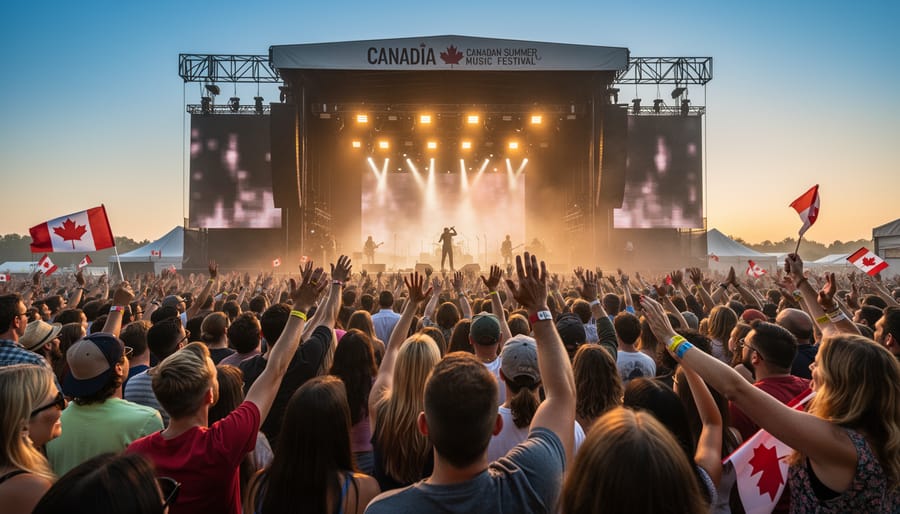
The Tragically Hip came out of Kingston, Ontario, in the mid-1980s, and somehow turned a small-city bar band into the closest thing Canada has to a shared campfire song. Gord Downie wrote about places and moments Canadians actually recognize: hockey rinks, Group of Seven landscapes, the strange story of a Bobcaygeon summer night. You didn’t have to know every reference to feel like the lyrics were talking to you.
What made them matter live was the room itself. Fans sang whole songs back at the stage, sometimes louder than the PA, and a Hip show felt less like watching a band and more like a huge hometown reunion. That energy hit its peak during the 2016 farewell tour, when the final show in Kingston was broadcast nationwide and people gathered in parks, pubs, and living rooms to watch together.
For festival-goers, their music is basically summer in Canada on repeat. Cottage docks, road trips, and field stages all have a Hip soundtrack, and you’ll hear that crowd-wide singalong energy at plenty of Canadian festivals even when they’re not on the bill.
2. Arcade Fire, Montreal Indie Rock That Went Global
Arcade Fire turned the Montreal indie scene into a worldwide conversation. Win Butler and Régine Chassagne started out playing the city’s small rooms in the early 2000s, and their debut album, Funeral, spread through word of mouth and blog buzz before anyone had a name for that kind of internet-fueled rise. It still sounds like a band that couldn’t contain itself.
Live is where they really separate from the pack. A big Arcade Fire set is theatrical in the best way: a stage crowded with multi-instrumentalists, violins, accordions, drums being hit with joyful abandon, and choruses built for thousands of people to shout back at once. Festival crowds who came for a casual afternoon end up singing along by the encore.
Their influence on festival bookings is easy to spot. Once they proved that an indie band with orchestral ambition could headline major stages, lineups started leaving room for bigger, more adventurous rock acts. If you want to feel why Montreal has such a reputation for music, start here.
3. Joni Mitchell, the Songwriter Everyone Else Is Chasing
Joni Mitchell grew up on the Prairies, and you can hear that wide-open sky in her writing. She started out in Saskatchewan folk clubs, taught herself guitar, and then started bending it into open tunings so strange that other players still scratch their heads over them. The songs that came out of it, from “Both Sides, Now” to “A Case of You,” read like diary pages set to music, honest enough to sting a little.
Here’s why she matters on a festival lawn. Joni proved that one person, a guitar, and a good story can hold a crowd as tightly as any light show. That’s the thread running through Canadian folk festivals today, where singer-songwriters trade verses in workshop-style sets and the best moments are the quiet ones, when thousands of people go silent for a single line.
Every acoustic act who makes a field hush up is borrowing a little of her playbook.
4. Metric, Festival-Ready Indie Rock With Serious Staying Power
Metric is the pick for anyone who wants a festival set that never lets the energy dip. The band came up in Toronto, with Emily Haines out front and James Shaw trading in sharp, shimmering guitar lines, and they’ve spent more than two decades turning indie rock into something you can actually dance to. Their sound leans on pulsing synths and big, singalong hooks, which is exactly what a crowd at golden hour wants.
Live, Haines moves like she’s got somewhere to be, and the band matches her stride for stride. Songs like “Help I’m Alive” and “Gimme Sympathy” tend to turn a field of people standing around into a field of people jumping. That’s the secret to their longevity: they sound just as urgent now as they did when I first caught them on a packed festival lawn.
If you like your sets loud, tight, and impossible to stand still through, put Metric near the top of your list.
5. Drake, Toronto’s Hip-Hop and Pop Powerhouse
Drake is the clearest example of how one artist can put a city on the global map. Born in Toronto, he built his career on a sound that blends rap and melodic pop, and he never pretended to be from anywhere else. Toronto got name-checked in lyrics, album art, and interviews, and listeners around the world started paying attention to the city itself.
His rise also pulled attention toward the wider Toronto scene, from producers and singers to the venues and arenas that host huge tours every year. For many fans abroad, he was the first introduction to the city’s music culture. Local listeners tend to point out that Toronto’s sound is much bigger than any single act, and it sits comfortably alongside traditional Canadian music in the way the country’s festivals and stages keep expanding their definition of what counts as Canadian. Whether you stream him daily or only know the radio hits, his impact on Toronto’s reputation is hard to argue with.
6. A Tribe Called Red (The Halluci Nation), Powwow Beats Meet Club Culture
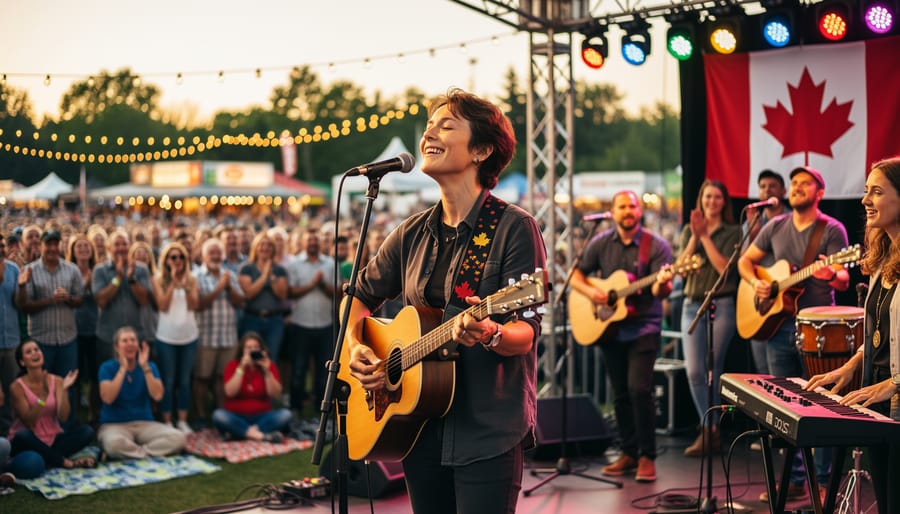
A Tribe Called Red, now performing as The Halluci Nation, built a sound that nobody else was making: powwow vocals and drumming layered over bass-heavy club beats. The group came out of Ottawa’s Electric Pow Wow parties, a monthly night that gave Indigenous youth a dance floor where they could see themselves reflected in the music. That origin story is the whole point. It’s club culture with roots.
At a festival, the effect is hard to describe until you’re in it. Thousands of people are bouncing to a kick drum, then a powwow chant cuts through and the whole field changes gear. It’s high-energy, a little unexpected, and completely their own.
Their influence goes past the dance tent. They brought Indigenous voices to mainstream electronic and festival stages and proved that traditional sounds can drive a modern dance floor. If you want representation and a proper party in the same set, this is your pick.
The Canadian Festivals Where You Can Catch This Music Live
7. Osheaga (Montreal), the Big-Name Summer Festival on Parc Jean-Drapeau
Osheaga is the festival I point people to when they want a big-name weekend without leaving a major city. It runs on Parc Jean-Drapeau, a green island in the middle of the St. Lawrence, so you get skyline views, shady trees, and a short walk between stages instead of a muddy field trek.
The format is the draw. Indie bands, hip-hop acts, and pop headliners share the same grounds, which means you can catch a guitar-heavy set, then wander over to a rap crowd, then end the night at a full-production pop show. It’s easy to see why it keeps landing on lists of Canadian summer festivals people plan their whole season around.
Getting there is simple: the Montreal metro runs right to the island, and walking or biking in from downtown is pleasant on a warm day. Pack sunscreen, a refillable water bottle, and comfy shoes, then leave time to wander the city’s patios afterward.
8. Montreal International Jazz Festival, Free Outdoor Music at Epic Scale
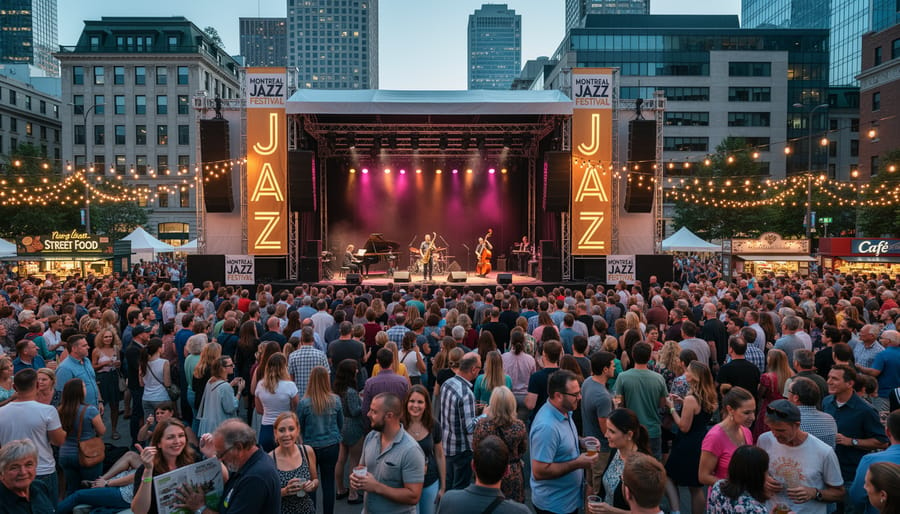
The Montreal International Jazz Festival is routinely billed as one of the largest jazz festivals on the planet, and wandering through it, you can feel why. It takes over the Quartier des Spectacles downtown for a stretch of summer, with big ticketed concerts in theatres and a huge run of free outdoor stages that anyone can wander into.
Here’s the part that surprises first-timers: you don’t have to be a jazz purist. The lineup stretches into blues, soul, funk, world music, and pop, so you might catch a brass band on one corner and a singer-songwriter a block away. Plenty of people spend the whole festival without buying a single ticket.
A few ways to soak it in:
– Arrive early to claim a patch of pavement near a stage you’re excited about.
– Wander between stages and let the street crowd guide you.
– Grab food from the vendors and local spots nearby, then eat while the music plays.
Check the official festival site for current dates and programming before you go.
9. Calgary Folk Music Festival, Prairie Sunshine and Heritage Park Vibes
The Calgary Folk Music Festival is the kind of event where you plan to catch a couple of acts and end up staying until the last song fades. It takes over Prince’s Island Park, right in the heart of the city, with the river and the downtown skyline as a backdrop. The vibe is relaxed, welcoming and genuinely community-driven, which is a big part of why people come back year after year.
What sets it apart is the workshop-style sets, where artists share a stage, trade songs and often collaborate on the spot. You’ll hear unexpected pairings and stories you won’t get at a standard headline set. The music leans folk and roots but wanders into plenty of other territory.
A local tip: bring a tarp or a blanket and claim a patch of grass early. Add sunscreen, a hat and a water bottle, then settle in for the whole day. Check the festival’s official site for current dates and lineups before you go.
10. Pemberton Music Festival and Other West Coast Mountain Weekends
Pemberton Music Festival shows what a mountain weekend can feel like on the West Coast. Picture a valley ringed by snowy peaks, a stage set against the pines, and a campsite just a short stroll from the music. It’s a different energy from city festivals like Osheaga, where you head home to a bed at night. Out here, you wake up in a tent, grab coffee, and wander back to the main stage.
The camping culture is a big part of the draw. Pack layers, because mountain mornings are chilly even in summer, and bring a headlamp for those late walks back to your tent. If you love the idea of music with a backdrop of peaks, our Banff festival guide covers a similar mountain vibe over in Alberta.
One important note: festivals change. Some pause, move, or disappear between seasons, so always check the official festival site for current status and dates before you book travel.
Quick Tips for Planning a Canadian Festival Trip
Canadian weather doesn’t play favourites, so pack for everything. Whether you’re at a prairie folk weekend or a mountain camp-out, bring layers, sunscreen and a light rain jacket, because a sunny afternoon can turn into a chilly, wet night fast.
Book your accommodation early. Festival towns fill up months ahead, and last-minute prices sting. Once you’re there, lean on public transit or shuttles, since parking near big sites is rarely worth the headache.
Hydrate more than you think you need to, and keep a refillable bottle handy. Toss foam earplugs in your pocket too, especially near the main stage. Your ears will thank you at 2 a.m., and you’ll still catch every note. When the sun gets to be too much, duck into a shaded corner for some of the best festival chill sets and recharge.
Canadian Music and Festival FAQs
Which Canadian festival is best for first-timers?
Osheaga in Montreal is a solid pick if you want a big, multi-genre weekend with plenty of food and easy transit. If you’d rather ease in, the Montreal International Jazz Festival lets you wander between free outdoor stages at your own pace.
Are there free Canadian music festivals?
Yes, a big chunk of the Montreal International Jazz Festival’s programming happens on free outdoor stages, so you can soak up the atmosphere without a ticket. Always check the official site for what’s free and what’s paid in any given year.
What’s the best time of year for festivals in Canada?
Summer is prime time, since long days and warm evenings suit open-air shows, and the Calgary Folk Music Festival and Osheaga both lean into that season. Pack a rain layer anyway, because weather can turn on you.
Do I need camping gear?
Only for mountain-style weekends like the Pemberton Music Festival and its West Coast cousins, where camping is part of the culture. City festivals like Osheaga are easy to do from a hotel or rental.
Still weighing options? If you’re dreaming bigger than one country, our global festival ideas can help you plan your next trip. And since lineups, dates, and even a festival’s status can shift, double-check the official website before you book anything.
The Big Picture: Why Canada’s Music Scene Deserves a Spot on Your Festival List
From Joni Mitchell’s songwriting to The Tragically Hip’s singalongs, from Arcade Fire’s big choruses to A Tribe Called Red’s club-ready powwow beats, Canada has soundtracked a lot of summer memories. Pair those names with stages like Osheaga, the Montreal International Jazz Festival, and the Calgary Folk Music Festival, and you’ve got a festival wish list that never runs dry.
So next time you plan a summer, add one act you’ve never heard of or a regional festival you’ve never visited. Those side trips tend to become the stories you keep telling.